
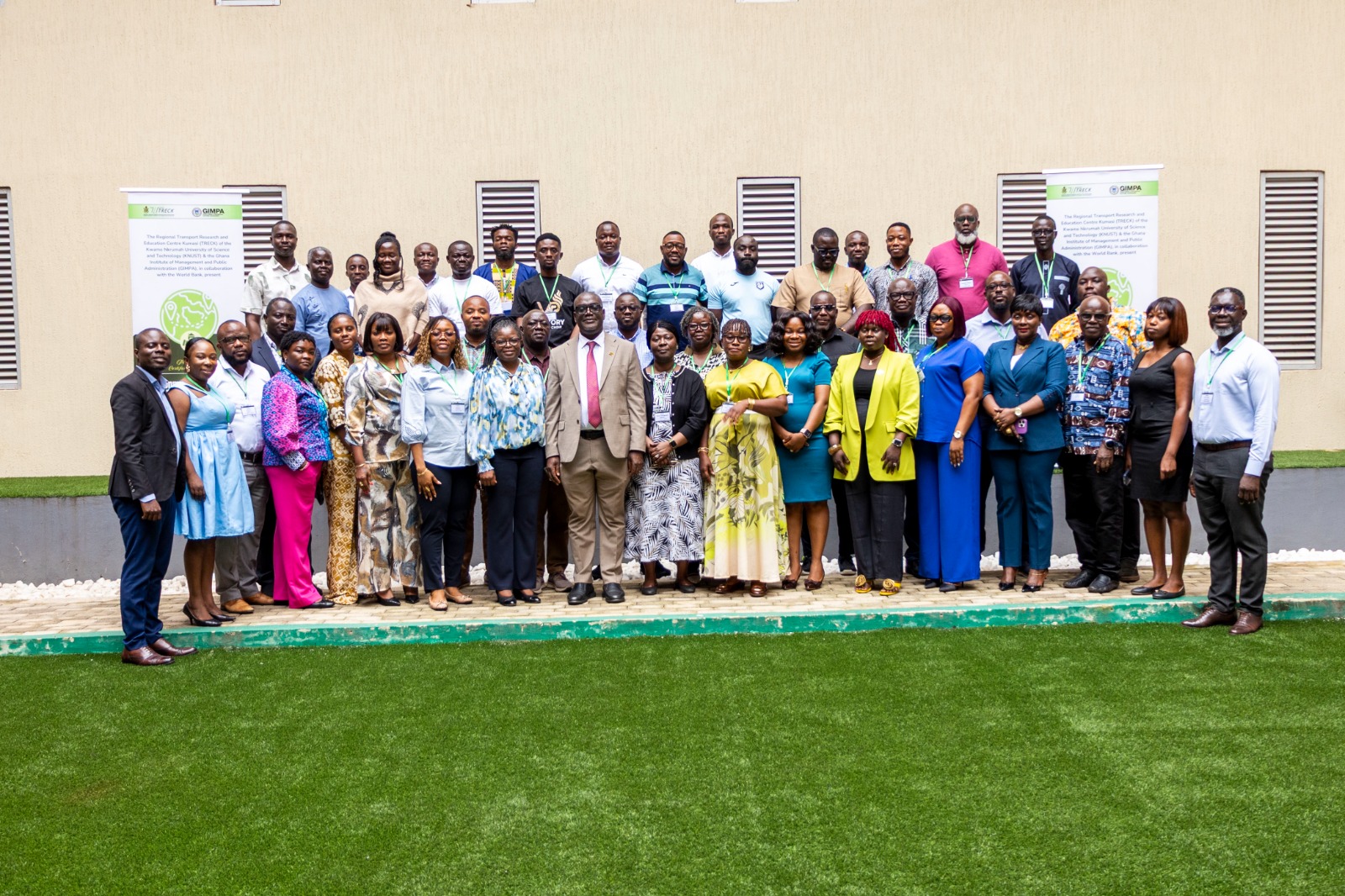
The Regional Transport Research and Education Centre Kumasi (TRECK) of the Kwame Nkrumah University of Science and Technology, Kumasi (KNUST), has partnered with the Ghana Institute of Management and Public Administration (GIMPA) and the World Bank to strengthen the capacity of professionals to manage environmental and social risks associated with land acquisition and involuntary resettlement.
The institutions organised a Professional Certificate Course on Environmental and Social Risks Management (ESRM): Land Acquisition and Involuntary Resettlement, providing practitioners and other stakeholders with practical knowledge, skills and tools to manage risks arising from infrastructure and development projects.
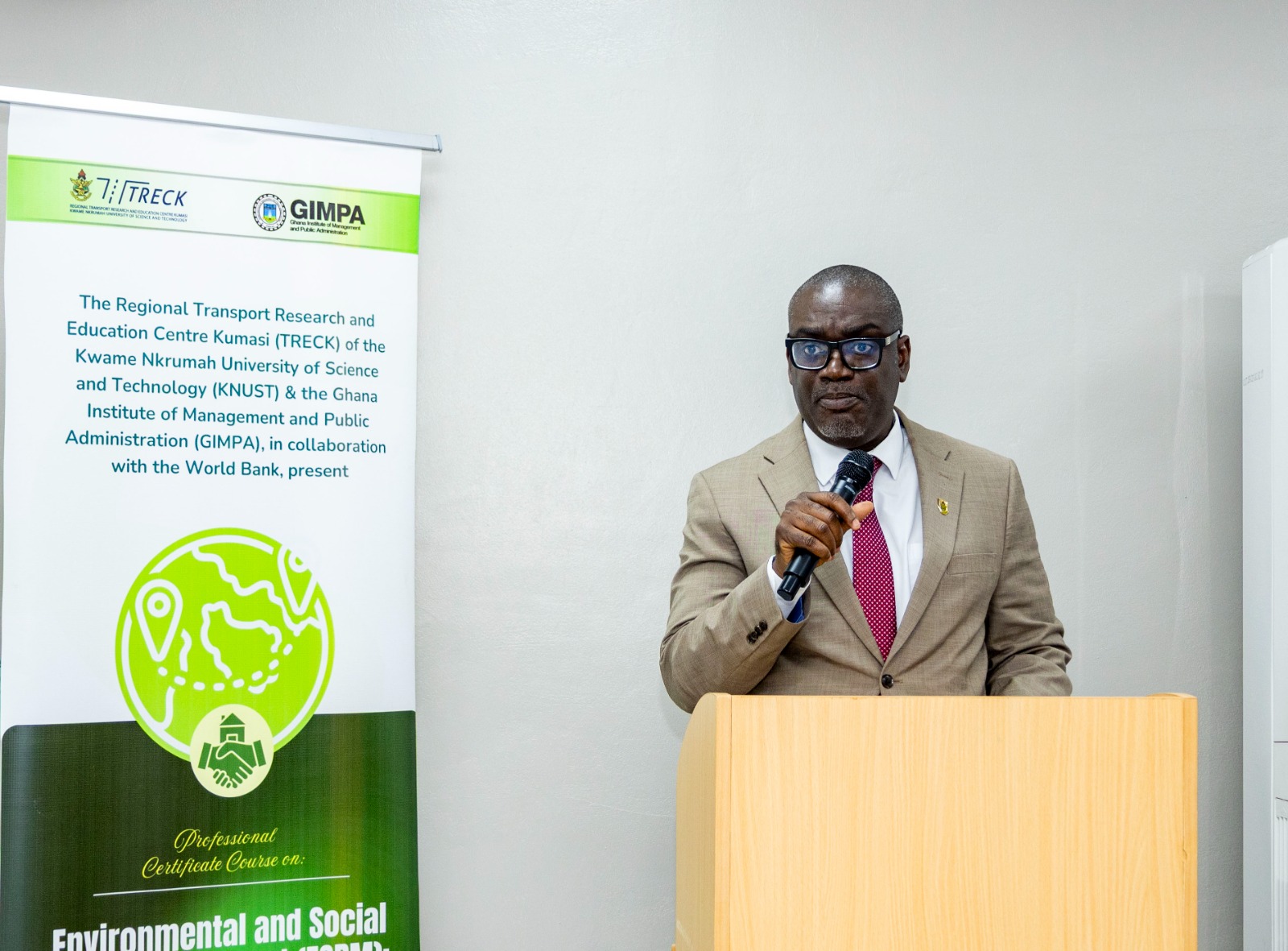
The Provost of the College of Engineering, Professor Kwabena Biritwum Nyarko, underscored the importance of land to national development, saying every major infrastructure intervention depended on access to land.
“Land is central to development. Every major infrastructure project, whether in transport, energy, housing, water and sanitation, or urban development, requires access to land,” he stated.
He said that although land acquisition was necessary for development, it could have significant consequences for individuals, households, businesses and communities, particularly when people were displaced from their homes, livelihoods and economic activities.
Prof. Biritwum Nyarko said land acquisition and involuntary resettlement should not be treated merely as administrative or technical processes but should involve careful planning, transparency, fairness, stakeholder engagement and respect for the rights and interests of affected people.
“This is particularly important in the context of Africa, where land ownership and administration can be complex and where competing interests in land can sometimes result in disputes and delays to development projects,” he said.
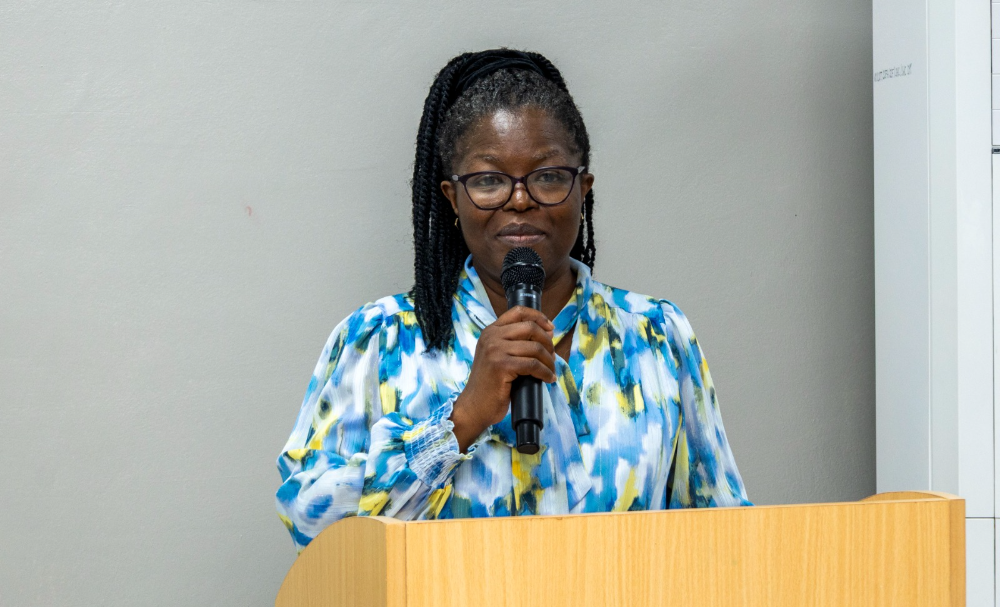
The Director of TRECK, Professor Helen M. K. Essandoh, said land acquisition and involuntary resettlement remained critical aspects of development projects because every infrastructure intervention required land.
She said that while governments, institutions and private organisations pursued projects to improve livelihoods and provide essential services, poorly managed land acquisition could lead to physical displacement, economic losses, disruption of businesses and livelihoods, and strained community relations.
“Development projects may result in major physical displacement, economic loss and environmental harm. When projects force communities to relocate, their homes, livelihoods, businesses, access to resources and relationships are disrupted,” she said.
Prof. Essandoh said the diversity of participants and facilitators was one of the strengths of the programme, noting that effective environmental and social risk management required collaboration among government institutions, project implementers, consultants, regulators, researchers and other stakeholders.
“At TRECK, capacity building is an important part of the Centre’s mandate. We are committed to creating opportunities that connect knowledge, research and professional practice, and that contribute to improved development outcomes in Ghana and across the region,” she remarked.
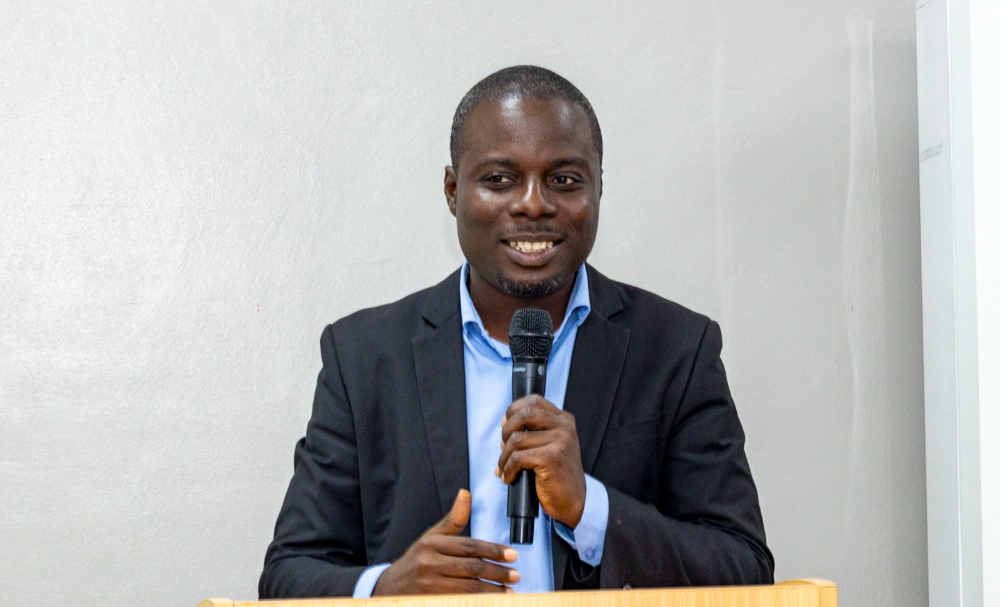
The Vice Dean of the Faculty of Civil and Geo Engineering, Professor Samuel Ato Andam-Akorful, used the historical example of the Chagos Islands to illustrate the long-term consequences of poorly managed land acquisition.
He said the displacement of communities and competing interests over strategically important land had continued to generate international disputes decades later, demonstrating the need for professionals to approach land acquisition with diligence and responsibility.
“Every project is about land, and if we do not do it right, it will come back to destabilise the project,” he said.
Prof. Ato Andam-Akorful encouraged participants to contribute actively to the training by sharing experiences from their countries and institutions, engaging in constructive debate and learning from one another.
Speaking on behalf of the World Bank, Dr Jonathan Zinzi Ayitey said the World Bank Group had progressively developed safeguard policies and environmental and social standards aimed at keeping people at the centre of development projects and investments.
He said assessments across several countries had identified gaps in national systems, institutional arrangements and human resource capacity, prompting efforts to strengthen professional expertise through education and specialised training.
Dr Ayitey said the collaboration among TRECK, GIMPA and the World Bank had led to the development of a curriculum covering land acquisition and involuntary resettlement as well as the broader environmental and social standards of the World Bank Group.
He said that while development projects provided roads, airports, food systems and other essential services, their ultimate purpose was to improve people's lives.
“At the end of the day, it is humans that are the centre of all the development,” he emphasised.
Story: Eunice Asare


